Further into the roundtable session, The question of what drives news outlets into foreign countries was brought up and the table concluded that the media understands their role in foreign policy. What the media covers is what the politicians must respond to, which in turn directly effects what policy is implemented and changed. The roundtable session concluded with the delegates agreeing that as consumers of the “fourth estate”, we can not become complacent if the news that is being reported in way that we do not see fit. Tomorrow morning’s discussion will center around the effects of social media on our generation.

Friday, April 15, 2011
Roundtable Wrap-Up: RT 14-Tuesday Part 2
Tuesday afternoon’s speakers provided an excellent foundation for our second roundtable discussion. Donald began this session by examining Dr. Zeynep Tufekci’s statement that the era of the autocrat is on its way out. The immediate response of the group was how the statement relates to Kim Jong Il’s dictatorship in North Korea. After deliberating the internet and media’s involvement in North Korea, the discussion turned towards international news as a whole. The group began to mull over an idea brought up by Anna, from Furman University, that our interest in foreign news is ignited by a sensational spark. Anna’s point directly relates to the uprising in Tunisia that has had a domino effect in the Arab World.

Roundtable Wrap-Up: RT 1-Thursday
In the final Roundtable of the conference the group opened by proposing the question, “What role does social media play in war?” Certainly, information posted on Facebook can come back to haunt any user, but could information posted by military personnel be utilized to gain a definite strategic advantage? With this in mind, the delegates quickly came to the conclusion that the manipulation of personal information could result in ethical dilemmas. Technology provides amazing empowerment to everyday people, however it can just as easily be misused to infringe upon rights, and in extreme cases, oppress the voice of the people.
The Roundtable found that by influencing political unrest, via the use of social media and social networks, governments had the capability to influence other states’ policy in a manner which has never previously been capable. Foreign governments now have the ability to magnify the effects of minor unrest against particular policies through social media coverage and attention. In a harder display of force governments are able to incite“Bloodless Revolutions” by playing upon the passions of social media users, particularly the youth.
Towards the end of the Roundtable, another excellent question was proposed. Are we nearing the end of conventional warfare? Will technology and social media influence be enough to avert traditional “physical” warfare? Midshipmen delegates, fearful of their job security, tended to argue that Cyber Warfare alone was not enough to wage war. Rather they argued, that cyber warfare will be used to supplement physical military force. Eventually, it was determined that although cyber warfare may develop to dominate conventional warfare, physical force deterrents will be necessary for the extent of the foreseeable future.
Moderator Brandon Beckler reluctantly concludes the Roundtable for group photographs, evaluations, and lunch. Overly the Roundtable has been an enormous success. The delegates are excited to attend future Foreign Affairs Conferences.
Moderator Brandon Beckler reluctantly concludes the Roundtable for group photographs, evaluations, and lunch. Overly the Roundtable has been an enormous success. The delegates are excited to attend future Foreign Affairs Conferences.
Roundtable Wrap-Up: RT 1-Wednesday
During our second day of discussion, Roundtable 2 sought to evaluate the constraints upon governments when monitoring internet traffic. Delegates generally agreed that information posted on public forums was free game for governments to monitor, however they also felt that a fine line should be drawn to prevent the government from monitoring private data such as email and keystroke history. The Roundtable examined the roll of governmental agencies in monitoring Internet traffic and evaluated various policies which the Department of Defense employs to utilize the Internet as a tool against crime and terrorist attacks. Furthermore, one delegate questioned as to how US Cyber Command would function in relation to other military command elements, and how this would impact the role of cyber warfare in future engagements. The conversation gained fervor when delegates began to debate the line between utilizing the Internet to ensure public safety and compromising the rights of users who have their personal information compromised by government monitoring. Tomorrow’s fifth and final Roundtable should prove to be very exciting considering the energy and insight of today’s discussion.
Roundtable Wrap-Up: RT 11-Wednesday
Started the day off right with a speech by ADM Dennis Blair, former Director of National Intelligence. He had some interesting insight into developments in cyber warfare and cyber security. The conversation at the roundtable first discussed the speech. Can we reinvent the Internet to make it more secure? In what image would it form? We decided that even if it were possible to recreate the Internet in another, the legality of such actions would be questionable at best. Who would be watching to make sure that the Internet forms right? Will they have access to all the information on the Web? There would have to be a worldwide consensus to change the Internet and that is unlikely to happen.
Who should be protecting cyberspace: the government or private industry? Both can help, but the interests of the business need to line up with the interests of the government, which is often not the case. Businesses are motivated by profit while government is motivated by a need to please and help people. But there can’t be only one option because that leads to corruption and monopoly. Is there extent to what the government can protect and what it can’t? It obviously needs to protect financial and national security concerns but what else? Social sites? Banks? Private businesses? What the government can protect ultimately comes down to budget. If government does decide to cooperate with businesses, how is that relationship portrayed by the rest of the world? Well, it depends on the country, but countries don’t always trust private companies, especially when they try to exploit them.
Regardless of the view of business, there are changes that need to be made to adapt to a globally interconnected world. First, bring in progressive thinkers and young people who understand the ways of technology. Once that infrastructure is established, the learning curve for the rest of the country will be quite steep. But this can only happen if the fear of technology and what technology brings is overcome. Familiarity brings comfort and acceptance. The same thing is true of cultural dissemination; people have to want it to happen, it can’t be forced. We finished with America’s role in the world. Some said we should focus on security then on soft power. Others said we should be the police of the world in the form of international organizations and regimes. We place our national interests over anything else and we should. But we need to decide to change ourselves for the better of the world though at the same focus on our domestic problems. Find that balance.
Who should be protecting cyberspace: the government or private industry? Both can help, but the interests of the business need to line up with the interests of the government, which is often not the case. Businesses are motivated by profit while government is motivated by a need to please and help people. But there can’t be only one option because that leads to corruption and monopoly. Is there extent to what the government can protect and what it can’t? It obviously needs to protect financial and national security concerns but what else? Social sites? Banks? Private businesses? What the government can protect ultimately comes down to budget. If government does decide to cooperate with businesses, how is that relationship portrayed by the rest of the world? Well, it depends on the country, but countries don’t always trust private companies, especially when they try to exploit them.
Regardless of the view of business, there are changes that need to be made to adapt to a globally interconnected world. First, bring in progressive thinkers and young people who understand the ways of technology. Once that infrastructure is established, the learning curve for the rest of the country will be quite steep. But this can only happen if the fear of technology and what technology brings is overcome. Familiarity brings comfort and acceptance. The same thing is true of cultural dissemination; people have to want it to happen, it can’t be forced. We finished with America’s role in the world. Some said we should focus on security then on soft power. Others said we should be the police of the world in the form of international organizations and regimes. We place our national interests over anything else and we should. But we need to decide to change ourselves for the better of the world though at the same focus on our domestic problems. Find that balance.

Roundtable Wrap-Up: RT 3
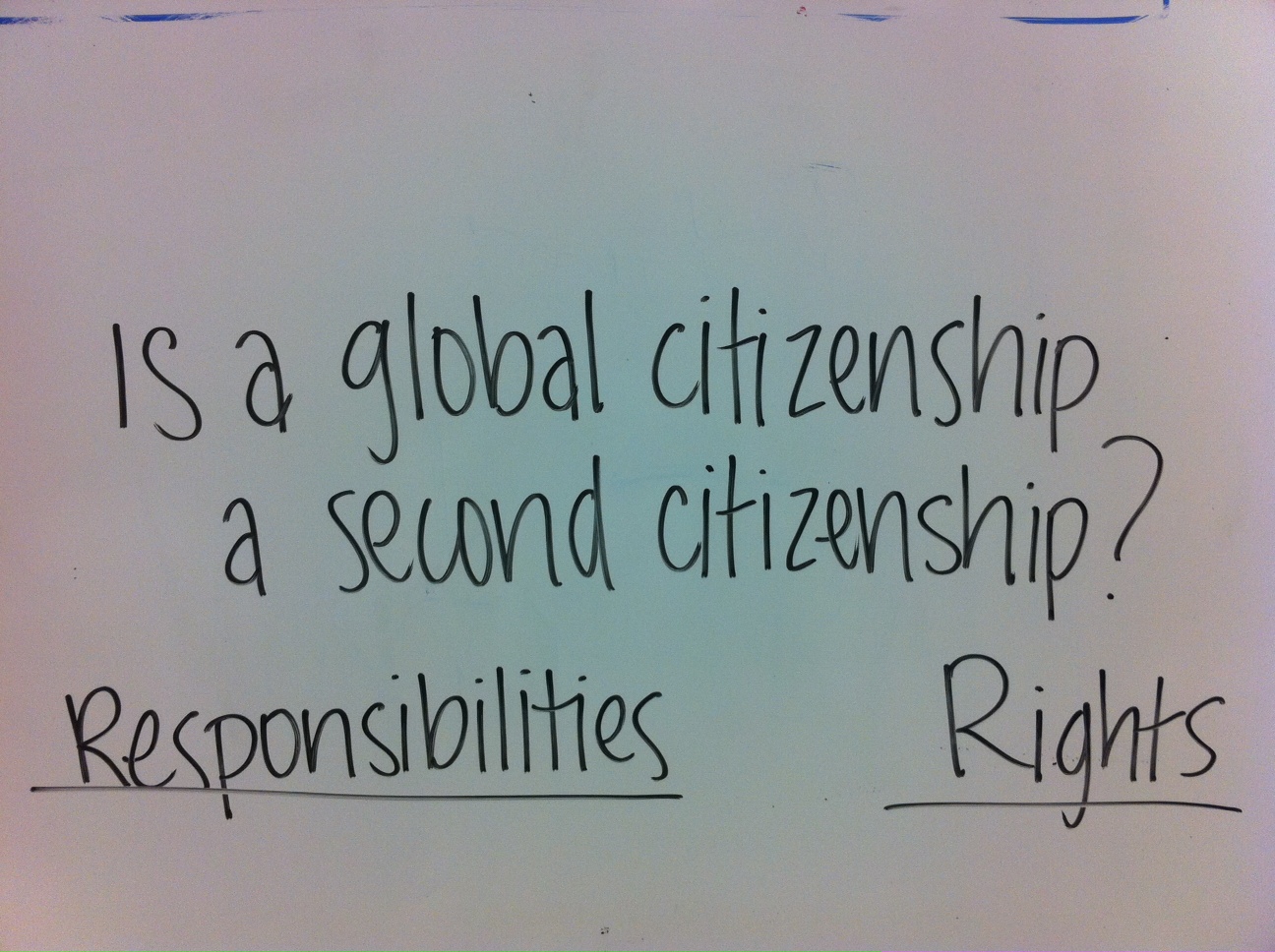
The internet provides very cheap entertainment, but does it create a divide between academics and entertainment? The internet appears to be changing how we process information. Since the creation of the internet people have become different consumers of media and news. Studies have shown that this change in how we process media has actually caused changes in our physical brain structure and also its physiology. This small change in how people are processing media may have led to a lack of synthesizing information, and more of a focus on information as opposed to knowledge. The move towards information over knowledge is affecting our society, and the world as a whole. The pace of the world is changing, and this change is becoming culturally and societally pervasive. The bombardment of information may be making it more difficult to become a well informed citizen, which makes it hard to really understand policy and become knowledgeable on the policy. If the amount of energy it requires to make an informed vote outweighs the impact of the vote then people may chose to vote uninformed - or simply not vote at all. If these uniformed community members fail to understand what is happening locally, how are they expected to actively participate in their community, let alone see global implications of their actions and understand international problems that will - and should - influence domestic policy?
Thursday, April 14, 2011
Roundtable Wrap-Up: RT 15-Wednesday
Absolutely stimulating discussion today by our delegates, as they became more comfortable with each other, willing to interject freely and disagree on issues. Moderator Chris O’Keefe began the day framing the day’s topic with the question: ‘Does the international community have the capability to preemptively end or stop genocide from occurring and if yes, should they?’ One problem we face in the promulgation of genocide awareness and its prevention stems from the American public’s increasingly desensitization to graphic images and videos from conflict zones. This result poses a difficult obstacle to those championing the prevention of genocide. Particularly fascinating to the group was what constitutes the difference in action in Libya and Darfur by the US and the international community? Is it too cynical to assume the disparity in response lies in the variance in national interest and popularity of the two issues? The existence of oil, difference in race, and availability of internet coverage especially videos and pictures all play an integral role in the difference in policy.
Moving on, the roundtable first postulated that active military intervention can prevent genocide, yet on closer introspection many came to believe that military force has never been ultimately successful. Instead, the answer lies in development. Creating an infrastructure that enables international awareness in a region, augments the standard of living, and educates the inhabitants should be the goal of policy makers around the world. When has there been genocide in an area of relative affluence? Never. The answer of development poses other questions that we could not answer definitively but many conjectures were debated. Who will bring this development? Private companies and corporations looking for natural resources, cheap labor, and an untapped population could be a possibility. Conversely, governments may have an incentive to aid in development in return for favorable trade deals, alliances, and control over natural resources. China’s funding of development in Africa may be an example of this policy. Where does the United States fit into this situation? Indubitably, the US cannot repeat its nation building efforts to the extent of Iraq and Afghanistan, yet we must act to preserve our humanitarian values to the best of our ability.
Moving on, the roundtable first postulated that active military intervention can prevent genocide, yet on closer introspection many came to believe that military force has never been ultimately successful. Instead, the answer lies in development. Creating an infrastructure that enables international awareness in a region, augments the standard of living, and educates the inhabitants should be the goal of policy makers around the world. When has there been genocide in an area of relative affluence? Never. The answer of development poses other questions that we could not answer definitively but many conjectures were debated. Who will bring this development? Private companies and corporations looking for natural resources, cheap labor, and an untapped population could be a possibility. Conversely, governments may have an incentive to aid in development in return for favorable trade deals, alliances, and control over natural resources. China’s funding of development in Africa may be an example of this policy. Where does the United States fit into this situation? Indubitably, the US cannot repeat its nation building efforts to the extent of Iraq and Afghanistan, yet we must act to preserve our humanitarian values to the best of our ability.
Subscribe to:
Posts (Atom)